
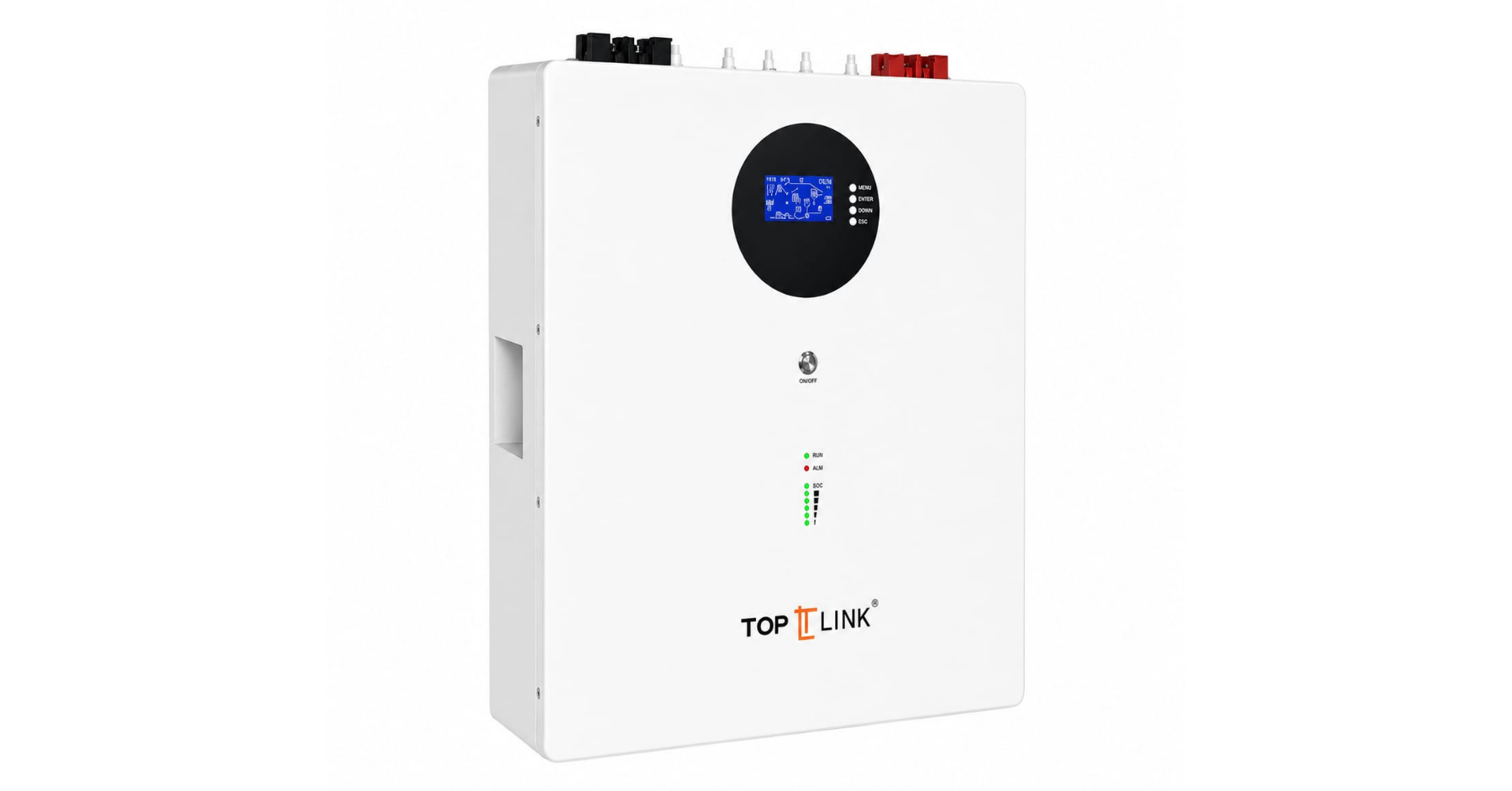
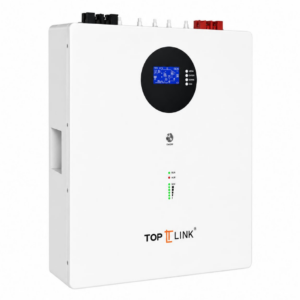
The TOPLINK 5.12kWh lithium battery is a rechargeable energy storage solution for solar power systems, home backup and compatible hybrid inverters. With a 51.2V 100Ah configuration, it delivers 5.12kWh of nominal energy capacity for residential and small-scale storage applications.
TOPLINK 5.12kWh Lithium Battery for Solar Storage
Make better use of your solar generation by storing excess energy for later. When connected to a compatible solar system, this battery stores electricity during the day for use after sunset. As a result, it can help reduce reliance on grid electricity when stored solar energy is available.
In addition, battery storage helps you plan your energy use around your household’s needs. For example, you can prioritise essential appliances during periods when solar generation is low.
Home Backup with a 51.2V 100Ah Battery
The TOPLINK battery can provide stored energy during power interruptions when installed with a compatible inverter configured for backup operation. Depending on your system, it can support essential loads such as lighting, Wi-Fi equipment, televisions and refrigeration.
However, actual backup time depends on appliance consumption, battery charge level and inverter efficiency. Therefore, assess both your energy requirements and your peak power demand before selecting a system.
TOPLINK 5.12kWh Lithium Battery Specifications
- Battery type: Rechargeable lithium-ion
- Nominal energy capacity: 5.12kWh
- Nominal voltage: 51.2V
- Rated capacity: 100Ah
- Equalisation charging voltage: 57.6V
- Float charging voltage: 56.0V
- Maximum continuous discharge current: 100A (1C)
- Maximum continuous charge current: 100A (1C)
- Discharge cut-off voltage: 43.2V
- Depth of discharge: 90%
- Maximum parallel connection quantity: 16 batteries, subject to manufacturer requirements
Plan for Your Energy Storage Needs
At the stated 90% depth of discharge, the nominal capacity corresponds to approximately 4.61kWh before inverter and other system losses. Consequently, the energy delivered to your appliances will be lower. Use this distinction when estimating runtime and comparing battery options.
For larger storage requirements, parallel connections may offer an expansion option. However, your installer must confirm supported battery models, connection limits and the correct configuration before adding batteries.
Check Compatibility Before Installation
Whether you are installing a new solar battery system or upgrading an existing setup, confirm inverter compatibility first. Your installer should check communication requirements, charging voltages, current limits and protective settings against the manufacturer’s documentation. Correct configuration helps the battery operate within its specified limits.
Reviews
There are no reviews yet.